Window hinges · 15 min read
Window Hinge Dropped: Adjust or Replace?

By The Sparrow team · Updated 30 November 2026
Sizes checked against the Sparrow parts catalogue · How we write guides
The first sign is often a noise: a scrape at the handle side as the window closes. Then the handle needs a small lift before it will lock, or the top corner rubs on the frame. It is tempting to assume a screw has worked loose, and sometimes one has. More often the friction stays that carry the sash have worn, and the window has settled a few millimetres out of line. This guide shows how to tell the difference, what adjustment can realistically achieve, and how to order and fit the right pair of stays.
What does a dropped window hinge mean?
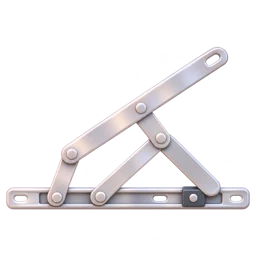
A friction stay is the metal hinge on a uPVC or aluminium casement window. It has a track screwed to the frame and an arm riveted to a sliding shoe, and the arm screws to the sash. Most side-hung windows have one at the top and one at the bottom. Top-hung windows have one down each side.
The stay holds the sash at whatever angle you leave it, which is where the name comes from, and it also carries the weight of the glass. When the rivets and shoe wear, the arm sits a little lower and the sash follows. That is what people mean by a dropped hinge: the window still hangs on the frame, but the opening edge has sunk and the sash no longer sits square.
Dropped is not the same as loose. A loose window rattles because a screw has come out or a seal has flattened. A dropped window scrapes, catches or refuses to lock because the geometry has changed. The two can happen together, which is why the checks below include the screws.
The amount of movement is small. A sash that has settled 2 mm or 3 mm can scrape along the frame even though nothing looks bent when the window is open. That is why the gap around the closed sash matters more than how the stay looks from the outside. It also explains why a screwdriver cannot rescue the situation once the wear is in the rivets.
Casement windows are the common case here. A tilt and turn window uses a different mechanism with its own adjustment points, so treat this guide as covering side-hung and top-hung casements only.
What are the signs of a dropped friction stay?
Worn stays produce a small set of symptoms, and most of them appear near the handle side of the sash. Watch the window through a full open and close, then compare what you see with the table.
| What you notice | What it usually means | What to check |
|---|---|---|
| Opening edge scrapes the frame near the handle | Sash has dropped on worn stays | Play at the lower stay rivets |
| Handle needs a lift or push before it locks | Sash sitting low or twisted | Gap around the closed sash |
| Top corner rubs as the window closes | Sash twisted, often one stay worn more than the other | Compare play in both stays |
| Window swings shut on its own | Friction in the stay has gone | The friction adjuster on each stay |
| Window will not stay open at all | Stay seized, bent or badly worn | The arm and shoe with the window open |
| Sash rattles in wind when closed | Worn stays or flattened seals | Seal compression and stay play |
| Gap around the sash uneven at all four corners | Dropped or twisted sash, or a moved frame | Measure the gap at each corner |
How do you diagnose a dropped sash in five checks?
Work through these in order with the window open and closed. They separate a worn stay from a loose screw, a bad seal and a frame problem.
- Open halfway and let go. A healthy stay holds the sash where you leave it. If it drifts down or swings shut, the friction has gone.
- Close it slowly and watch the opening edge. Note exactly where it touches the frame first. A rub at the bottom of the opening edge points to a sash that has dropped.
- Look at the gap around the closed sash. It should look even on all four sides. A wedge-shaped gap means the sash is out of square.
- Try the handle with the window shut. If it locks easily, the locking side is healthy. If it needs a lift, the sash is sitting low.
- Lift the open edge gently. With the window part open, put a hand under the opening edge and lift a few millimetres. Watch the rivets and the shoe in the track. Visible movement there is wear.
Finish by checking every screw on both stays. A screw that turns but never tightens has stripped its hole, and that is a different repair from a worn stay.
Is it the hinge or the handle?
The quick test is whether the window closes flush. If the sash seats evenly against the frame and the gap looks right, but the handle still will not lock, the stays are probably fine. The fault is then in the handle, the gearbox inside the sash, or the keeps on the frame.
If the sash catches before it reaches the frame, or the gap closes at the top and opens at the bottom, the stays are the likely cause. Replacing a handle on a dropped window wastes money and leaves the scrape. The reverse is also true: new stays will not fix a broken handle. Our guide to a uPVC window that will not close properly walks through that split in more detail, and the handle that will not turn or lock covers the locking side.
Not sure which one you have?Snap it next to a £1 coin and Sparrow names the exact replacement for window hinges, with the measurements to check. Your first scan is free.
Get the appWhy do friction stay rivets wear?
A friction stay is a set of metal parts joined by rivets. The rivets are meant to be tight, with just enough movement for the arm to swing. Every open and close flexes them under the weight of the glass, and the load is not shared equally. The lower stay on a side-hung window does more work, which is why it usually wears first.
Grit makes it worse. Dust and pollen collect in the track, the shoe grinds them into the rivet joints, and the holes slowly become oval. Once a rivet hole is oval, the arm can move up and down as well as round, and no amount of tightening will restore the original fit. The same happens at the shoe, where the slider loses its square edge and develops a rock.
You can slow the process. A dry track is worth cleaning out and lubricating with a silicone spray, and a stiff but tight stay often improves a lot. That is maintenance, not a cure. If you can see movement at the rivets when you lift the sash, the wear has gone too far for cleaning to help.
A stay that has been stiff for months puts extra load on its rivets, because every open and close forces the arm instead of letting it swing. Easing a stiff stay early is worth the effort, even if it feels like a small problem next to a window that has already dropped.
Stainless rivets last longer than plated ones, but even stainless wears once grit gets into the joint. The track itself also wears: the shoe loses its sharp edges and starts to rock, which shows as a small click when you change the direction of the sash.
Can a dropped window hinge be adjusted?
Friction stays have far less adjustment than door hinges. There is no height screw and no cam. What you can do is limited, and it helps to know what each adjustment changes before you reach for a screwdriver.
| Adjustment | What it changes | Effect on a dropped sash |
|---|---|---|
| Friction screw or nut on the stay | How hard the arm is to slide | Stops the window swinging, but does not lift the sash |
| Slotted fixing holes | Position of the stay by a millimetre or two | Small correction only, not enough for worn rivets |
| Bending the arm | Shape of the arm, unevenly | Risks cracking the arm and making the sash sit worse |
| New screw holes in the frame | Where the stay sits | Can shift the sash, but weakens the frame if repeated |
| New pair of stays | Restores the original geometry | The only reliable fix for a sash that has dropped |
If the window is merely stiff, clean and lubricate the track before you adjust anything. If it swings shut, tighten the friction adjuster a quarter turn at a time and test. If it has dropped, adjustment will not recover the lost height.
The friction adjuster is usually a small screw or nut at the shoe end of the track, or a screw through the arm near the pivot. Turning it squeezes the sliding parts together and makes the arm harder to move. It has no effect on where the sash sits in the frame. Some stays have no adjuster at all, and those can only be cleaned or replaced.
Slotted holes are worth a try only when the sash has moved sideways rather than down. Loosen the two or three screws on the sash side, ease the sash across by a millimetre, and tighten again. If the holes are round rather than slotted, there is no movement to find.
What does stack height have to do with a dropped sash?
Stack height is how far the hinge stands out from the frame when the window is closed. On most uPVC windows it is either 13 mm or 17 mm. The figure is set by the depth of the sash and the frame rebate, and it decides how deep the sash sits in the opening.
A stay with the wrong stack height can make a perfectly good sash look dropped. If the stack is too tall, the sash sits proud and the handle will not pull it in. If it is too short, the sash sits too deep, the seals crush and the opening edge catches. Neither fault is fixed by adjusting the stay, because the metal itself is the wrong shape.
Measure it with the window closed. Put a ruler against the frame face beside the track and measure to the top of the stay body. Do it at both stays, because a previous repair may have mixed two sizes. Then match that number when you order. The friction stay size guide has more on how stack height and track length work together.
How do you measure the stay you need?
Two numbers decide the part: the track length and the stack height. Length is sold in inches, so a tape with both scales is useful. Measure with the window closed, when the track ends are easiest to see.
| Measurement | Common sizes | How to take it |
|---|---|---|
| Side-hung track length | 10" · 12" · 16" · 20" | End to end along the track, window closed |
| Top-hung track length | 12" · 16" · 20" · 24" | End to end along the track, window closed |
| Stack height | 13 mm or 17 mm | Frame face to the top of the stay body |
| Screw hole spacing | Check your old stay | Centre to centre, then compare with the new part |
- Decide whether the window is side-hung or top-hung by where the stays sit.
- Measure the track end to end and write down the measurement in millimetres and inches.
- Measure the stack height at both stays.
- Check for an egress or easy-clean stay, which must be replaced like for like.
- Count the screws and note their positions, then compare the old stay with the new one before fitting.
If a measurement falls between two nominal sizes, trust the old stay rather than rounding to the nearest. Stays are made to fit the routed recess in the frame, and a part that is 10 mm too long or too short will not sit flat. When in doubt, take the old stay to the shop or compare its photo with the listing.
What should you check before you order?
A few minutes with the old stay saves a return trip. Hold the new part against the old one if you can, or compare the listed dimensions carefully.
- The pair matches. Both stays on the window should be the same length and stack height. If they are not, someone has been here before, so measure each one.
- The hang is right. Side-hung and top-hung stays are not interchangeable.
- The special type is right. Egress stays open wider for escape, and easy-clean stays let the sash slide across. Replace like for like.
- The screw holes line up. A stay with different hole spacing means drilling new holes in the frame, which is best avoided.
- The frame is sound. Check for cracks around the old screw holes and for a frame that has moved out of square. New stays will not fix either.
- The screws are stainless steel. Ordinary steel screws rust in the frame and seize.
Buy both stays in one order and check that they came from the same listing. Mixed stock sometimes arrives with one stay of each stack height, and the difference is easy to miss until the window is back on. Keep the packaging until the window has been tested.
How do you remove the old stays safely?
The sash is heavy and free once the screws come out, so this is a two-person job on anything but the smallest window. Clear the area below the window first.
- Open the window fully so the sash screws are easy to reach.
- Have a helper hold the sash firmly with both hands.
- Undo the screws that fix the arms to the sash, working from the bottom stay up.
- Lift the sash clear and stand it somewhere safe, with the glass vertical.
- Undo the frame screws and lift out the old stays.
- Keep the screws in a pot, then clean the track recess and check the frame for damage.
Wear gloves, because the end of a stay can be sharp and the frame recess often hides slivers of metal. If the window is above a path or a hard floor, put a blanket down before the sash comes off. Never leave a sash leaning against a wall on its own; a gust or a nudge can bring it over.
If a screw spins without coming out, the hole is stripped. Stop and deal with that before fitting new stays, because a stay held by one loose screw will drop again.
How do you fit new stays and set the sash level?
Fit the stays to the frame first, then hang the sash. Use the existing holes wherever the new part allows, and do not fully tighten anything until the window has been closed once.
- Screw the new stays to the frame, starting with the top stay and using the old holes.
- Leave the screws snug, not fully tight, so the stay can still shift a fraction.
- With the helper holding the sash, swing the arms out to the open position, locate the sash on them and start the sash screws.
- Close the window gently and look at the gap on all four sides.
- Lift or ease the sash until the gap is even, then tighten the sash screws.
- Tighten the frame screws and check the window opens and closes without rubbing.
- Turn the handle with the window shut and confirm it locks without lifting.
- Open and close the window a few times, then clean and lubricate the tracks.
Do not overtighten the screws into uPVC. The plastic will give a little as the screw bites, and a screw turned too far strips the hole and leaves the stay loose. Stop when the screw holds firmly, not when it will turn no more.
Some fitters prefer to screw the stays to the sash first and then lower the whole assembly into the frame track. That works too, provided the helper can hold the sash steady and the track is clean. The important part is that the sash is supported until the last screw is tight.
What if the window still drops after fitting?
Most problems after fitting come from the part or the alignment rather than the technique. Work through the symptom before taking anything off again.
| Symptom after fitting | Likely cause | What to do |
|---|---|---|
| Still drops at the handle side | Wrong stack height, or one stay is a different length | Compare part numbers and measure both stays |
| Binds at one corner only | Stays not parallel, or sash screws in different holes | Loosen the sash screws, close the window, retighten |
| Will not close flush | Stack height too tall, or a seal trapped behind the sash | Check the stack against the old stay and free the seal |
| Handle will not lock | Keeps or handle, not the stays | Check the locking points line up with the keeps |
| Rattles in wind | Friction too loose, or worn seals | Tighten the friction adjuster, then check the seal |
| Stiff to open | Dry track or screws over-tightened | Clean and lubricate, then ease the screws |
What are the common mistakes?
- Replacing only the stay that looks worst. The other one is the same age and will fail next.
- Buying by overall length rather than the track length.
- Ignoring stack height because the old stay looked similar.
- Fitting a side-hung stay upside down, which puts the arm on the wrong side of the track.
- Forcing a screw into a stripped hole instead of repairing it.
- Leaving the sash screws loose after aligning the window.
- Swapping an egress stay for a standard one on a window used as an escape route.
What should a landlord or multi-home owner do?
Record the stay size for each window once, room by room, and keep it with the property notes. Windows in the same house are often different sizes, and a mixed batch of replacements is easy to muddle. Keeping one spare pair of the most common size saves a second order when a tenant reports a scrape. Check every window on the same visit, because the ones that are opened most often tend to wear fastest.
When should you stop and call a window specialist?
Stop if the sash is large, double glazed and heavy, or if the window is upstairs and you cannot support it safely. Stop if the glass is cracked, the frame is cracked around the screws, or the frame itself is out of square. Stop if the window is part of an escape route and you are unsure about the stay type, because the opening width matters there.
A specialist is also the right call if new stays of the correct size still leave the sash out of line. That points to a twisted sash or a failed frame weld, which is a bigger repair than a hinge swap.
How can Sparrow help you get the size right?
Sparrow is an iPhone app made by ThinkingAI Limited that identifies worn household parts from a photo taken next to a pound coin (23.43 mm across). Photograph the old stay from the side with the coin on the track, and the app estimates the track length and shows the matching friction stay spec, the checks to make before buying, and links that search UK retailers. The size finder also works without a photo if you would rather answer a few questions first.
Frequently asked questions
Can a dropped window hinge be adjusted?
Only in a limited way. The friction screw changes how stiff the stay is, and slotted holes allow a millimetre or two of movement, but worn rivets cannot be tightened back into shape. If the sash has dropped, new stays are the fix.
How do I know if the hinge has dropped or the frame has moved?
Check the gap around the closed sash. If it is uneven and the stays show play at the rivets, the stays are worn. If the frame is out of square or the sash itself is twisted, new stays will not correct it.
Why does my window drop when I open it?
The lower stay carries more of the sash weight, so its rivets and sliding shoe wear first. As play builds, the opening edge sinks and the sash starts to catch the frame near the handle.
What size window hinge do I need?
Measure the track end to end with the window closed and match it to a nominal length: side-hung 10, 12, 16 or 20 inch, top-hung 12, 16, 20 or 24 inch. Then match the stack height, usually 13 mm or 17 mm.
Do I have to replace both window hinges?
Yes, replace both stays on the sash. They wear together, and pairing a new stay with a worn one leaves the sash uneven and hard to close.
Can I fit new friction stays myself?
Yes on a small ground-floor window, with a helper to hold the sash. Leave it to a window specialist if the sash is large, heavy or upstairs, or if the glass is cracked.
Not sure which one you have?Snap it next to a £1 coin and Sparrow names the exact replacement for window hinges, with the measurements to check. Your first scan is free.
Get the appParts guides, Sparrow
We build Sparrow, the iPhone app that identifies worn household parts from a photo taken next to a £1 coin. Our guides cover the six parts Sparrow matches: tap cartridges, euro cylinder locks, uPVC window handles, door handles, shower door seals and window hinges. Every size in a guide is checked against the same parts catalogue the app uses.

