How to measure a euro cylinder lock (and get the right size first time)
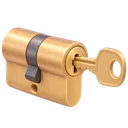
A euro cylinder is the key barrel in almost every uPVC and composite front or back door in the UK. They wear out, keys snap, and people change them when they move house. The lock itself is cheap and easy to swap. The hard part is buying the right length, because a cylinder that is a few millimetres off either will not let the door lock properly or will stick out where it can be snapped.
What you need
- A ruler or tape measure marked in millimetres
- A screwdriver for the fixing screw (usually a large Phillips or Pozidriv)
- The key, if you want to take the cylinder out
How to measure a euro cylinder, step by step
- Open the door and find the fixing screw. It is the long screw in the edge of the door, on the same level as the keyhole. It goes straight through a hole in the middle of the cylinder.
- Measure the outside length. From the centre of that screw, measure to the outside face of the cylinder. Round to the nearest millimetre.
- Measure the inside length. From the centre of the screw, measure to the inside face.
- Write it outside/inside. For example 35 mm outside and 45 mm inside is a 35/45, 80 mm overall.
- Check the inside. A keyhole on both sides is a key/key cylinder. A knob on the inside is a thumbturn.

Not sure which one you have?Snap it next to a £1 coin and Sparrow names the exact replacement for euro cylinder locks, with the measurements to check.
Download on the App StoreGet the appTaking the cylinder out for an exact measurement
Measuring a cylinder in the door works, but measuring it on a table is more accurate:
- Open the door and undo the fixing screw completely.
- Put the key in and turn it about 10 to 15 degrees either way, so the cam (the small lever in the middle) lines up with the body.
- Pull the key gently and the cylinder slides out.
- Measure from the centre of the screw hole to each end.
Fitting the new one is the same in reverse: slide it in with the cam lined up, fit the screw, and check the key turns smoothly and the door locks before you close it.
Common euro cylinder sizes
| Size (outside/inside) | Overall length | Where you usually find it |
|---|---|---|
| 30/30 | 60 mm | Thin doors, some internal and older uPVC doors |
| 35/35 | 70 mm | Standard uPVC back and side doors |
| 35/45 | 80 mm | Very common on uPVC front doors |
| 40/40 | 80 mm | uPVC and composite doors |
| 40/50 | 90 mm | Composite doors |
| 45/45, 45/50, 50/50 | 90–100 mm | Thicker composite and timber doors |
Sizes usually go up in 5 mm steps on each side. See the full euro cylinder sizes chart for anti-snap ratings and thumbturn options.
If your measurement falls between two sizes
On the outside, the cylinder should sit flush with the handle or escutcheon, or stand no more than about 3 mm proud. A cylinder that sticks out gives a thief something to grip. On the inside, a few extra millimetres matter less, and rounding up gives a thumbturn more room to turn. If in doubt, measure again from the screw centre rather than the edge of the screw head.
Common mistakes
- Measuring from the edge of the screw hole instead of its centre (adds or loses 2 to 3 mm).
- Halving the total length on an offset door.
- Reading the outside and inside the wrong way round.
- Forgetting the thumbturn: a key/key cylinder will not fit a door you want to open from inside without a key, and the other way round.
Frequently asked questions
Do you measure a euro cylinder from the screw or the cam?
From the centre of the fixing screw hole. The screw passes through the body of the cylinder in line with the cam, so measuring from the screw centre to each end gives the two lengths that sizes are sold by.
What does 35/45 mean on a euro cylinder?
35 mm from the fixing screw to the outside end and 45 mm from the fixing screw to the inside end, so 80 mm overall. The first number is normally the outside.
What if my measurement falls between two sizes?
Cylinders are usually sold in 5 mm steps. On the outside, choose the size that sits flush with the handle or no more than about 3 mm proud; a cylinder that sticks out a long way is easier to attack. On the inside, round up if a thumbturn would otherwise be cramped.
Can I measure the cylinder without taking it out?
Yes. With the door open you can measure from the centre of the fixing screw to each face of the door furniture. Taking it out is more accurate: undo the fixing screw, put the key in, turn it about 10 degrees and slide the cylinder out.
Not sure which one you have?Snap it next to a £1 coin and Sparrow names the exact replacement for euro cylinder locks, with the measurements to check.
Download on the App StoreGet the app