uPVC window handles · 13 min read
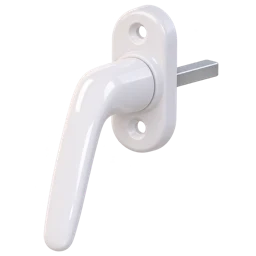
30mm Spindle Window Handle: When You Need a Short One

By The Sparrow team · Updated 30 November 2026
Sizes checked against the Sparrow parts catalogue · How we write guides
Most window handle advice starts with 40 mm, because that is the size shops stock. If your window has a shallow profile, a 40 mm spindle can be too long, and the handle will never sit flat no matter how hard you tighten the screws. This guide is about the short end of the range: when 30 mm is right, how to measure it with the window closed, and what a spindle that is too long does to the window.
When a 30 mm spindle is the right choice
A 30 mm spindle is one of the three common espag lengths, alongside 35 and 40 mm. It is the shortest of the three, so it suits windows where the distance from the handle face to the gearbox is small.
- Shallow sash profiles. The handle sits on a thin section of uPVC, and the gearbox is close behind it.
- Slim frames. There is less room around the handle, so a short spindle keeps the base close to the sash.
- Some aluminium and timber windows. These can use espag-style locks with a shallow mounting depth.
- A previous repair. If someone has already fitted a short spindle and it works, the window may need that length.
- Tight clearances. Where the handle would foul a reveal, blind or adjacent frame if it stood further out.
None of these replace the measurement. A window that looks standard can still have a shallow gearbox position, and a window that looks slim can take a 35 mm. The old handle is the best evidence.
Do not choose by the age of the window either. A recent window can use a short spindle if the profile is shallow, and an older window can use a longer one. The profile and the gearbox, not the date, set the length.
How to measure with the window closed
You can measure the old handle on the bench, and that is the simplest method. Measuring with the window closed is the better check when the old handle is broken, missing or suspect, because it measures the window rather than the part.
- Close the window and turn the handle to the locked position.
- Release the two screws behind the cover plate and draw the handle away.
- Keep the screws together and look into the empty spindle hole.
- Shine a torch in. The gearbox slot sits at the far end.
- Insert a thin rod, a spare piece of 7 mm spindle or a thin Allen key until it seats in the slot. Do not force it.
- Mark the rod level with the face of the sash.
- Pull the rod out and measure from the mark to the end that went in.
- Measure the old handle from its flat base to the spindle tip and compare the two figures.
The depth to the gearbox is the maximum a spindle can be. The right handle is usually slightly shorter, so the base can sit flat. If the old handle measures 30 mm and the depth is close to 30 mm, a 30 mm replacement is the right starting point.
Take the measurement twice. On the second attempt, rotate the rod a quarter turn before it seats, so it finds the slot rather than resting on a shoulder. If the two readings differ, use the shorter one and check the old handle again.
Using the spindle hole as a depth gauge
The spindle hole is a ready-made gauge. It is square, it lines up with the gearbox, and it is exactly where the new spindle has to go. A thin rod that fits the hole will follow the same path and stop at the same slot.
Use a rod that is thinner than the hole, so it does not jam. A piece of 6 mm or 8 mm rod is easier to find than a 7 mm square bar, but it can sit deeper into the slot than a square spindle would. Allow for that when you read the measurement. If you have a spare 7 mm spindle, use it: the fit will be closer and the mark will be more accurate.
Do not use a screwdriver as a depth gauge. The tip is tapered, it can damage the slot, and it will not sit at the same depth as a square spindle. A wooden dowel or a piece of stiff wire is safer.
Why measure with the window closed?
When the window is closed, the sash is held steady in the frame. That matters when you feed a thin rod through the spindle hole: any movement of the sash can make the rod catch on the edge of the slot or stop short, and the reading will be wrong.
An open sash can swing or shift while you lean on it, especially if the hinges are worn. Closing the window removes that movement, so the rod goes in straight and the mark is easier to place. On a window above a worktop or in a tight corner, closing it also gives you a stable surface to work against.
The closed position does not change the distance from the handle face to the gearbox, because both are fixed to the sash. The reason to close the window is control. Take the measurement twice and compare it with the old handle before you order.
Not sure which one you have?Snap it next to a £1 coin and Sparrow names the exact replacement for upvc window handles, with the measurements to check. Your first scan is free.
Get the appThe risk of a spindle that is too long
A spindle that is too long does not simply stick out a bit. It reaches the bottom of the gearbox slot before the handle base reaches the sash. The last few millimetres have nowhere to go, so the handle stands proud of the window.
The screws can still pull the handle down, because they are fixed to the sash. That pulls the base onto the window and pushes the spindle hard into the gearbox. The force is carried by the gearbox housing and the sash around the screw holes. Over time this can crack the housing, distort the holes or make the locking mechanism stiff.
The visible signs are a gap under the handle base, a handle that will not sit flat, screws that keep loosening, or a window that is hard to lock. On a slim frame there is less material around the gearbox, so there is less room to absorb the extra length. Do not rely on the screws to close a gap that the spindle is holding open.
To confirm the gap, lay a straight edge across the base of the handle and the sash. If the straight edge rocks or you can see light under the base, the handle is not seated. Take it off and compare the spindle with the old one before you try again. A gap of a millimetre or two is enough to matter on a short spindle.
30, 35 and 40 mm: choosing by sash depth
| Spindle length | Sash depth it suits | Engagement | Main risk |
|---|---|---|---|
| 30 mm | Shallow profile, gearbox close to the face | Shortest, so the tip must be in good condition | Too little engagement if the gearbox is deeper |
| 35 mm | Medium profile | Moderate | Often mistaken for 40 mm when measured roughly |
| 40 mm | Deeper profile | Longest of the common three | Bottoming out in a shallow sash |
Think of the lengths as a range, not as three separate window types. The gearbox position is set by the profile and the lock, so two windows of the same style can need different lengths. If the depth measurement falls between two lengths, choose the shorter one only if it still engages the gearbox properly. A spindle that is slightly short will not drive the lock; one that is slightly long will hold the handle off the frame.
Slim frames and restricted gaps
Slim frames leave less room for everything: the handle base, the spindle, the gearbox and the locking strip. A short spindle helps because it keeps the handle close to the sash, but it also means the handle has less clearance from the frame or the reveal.
Check the handle through its full travel before you tighten the screws. On some slim windows the handle grip passes close to the frame or a window board when it is turned. A handle with a longer grip or a deeper base can foul even when the spindle is correct. If it does, you need a different handle style, not a different spindle length.
Also check the gap between the handle base and any surrounding trim. A base that is too wide can overlap a decorative cover or sit on a raised section of the frame, which stops it seating flat. The spindle can be the right length and the handle still wrong because the base is the wrong shape.
Handle style affects clearance too. A long lever needs more room to sweep than a short one, and a locking handle with a key boss is deeper than a plain handle. If the old handle just cleared the frame, match its shape and depth rather than choosing a different style because it looks better. The uPVC window handle types guide shows the common shapes.
Cranked handles on shallow frames
A cranked handle has a stepped base, so the grip stands further out from the window. Cranked handles suit sashes that stand out from the frame, or places where the grip must clear a reveal or a blind. On a shallow frame, the step can be the difference between a handle that turns cleanly and one that scrapes the sill.
The step height is a separate measurement from the spindle length. Measure how far the base rises from the mounting face, and match it. A cranked handle with the wrong step height can sit too close or too far out, even if the spindle is correct.
Cranked handles also change where the spindle starts. Measure the spindle from the flat mounting face, not from the top of the step, and compare like with like. If you measure a cranked handle from the wrong point, you will order a spindle that is too short or too long.
Measure the step height by laying a straight edge across the mounting face and measuring up to the underside of the grip. Write it down with the spindle length and screw centres. A cranked handle is only correct when all three match.
Screw centres and base shape
Screw centres are the distance between the centres of the two fixing holes. On espag handles they are often 43 mm, but slim frames sometimes use a narrower spacing. Measure from centre to centre, not from the outside edges, and note whether there are two holes or three.
The base shape matters as much as the spacing. A flat base sits directly on the sash. A stepped base stands off it. A base that is too large can cover a drainage slot or overlap a frame detail. A base that is too small can leave the old screw holes exposed, which lets water into the sash.
If the new handle covers the old holes but the centres are slightly different, do not enlarge the holes to make it fit. That weakens the fixing and can break the seal around the screw. Buy a handle with the right centres, or ask a window specialist to advise on an adaptor plate.
What the 30 mm measurement includes
Most wrong orders come from measuring the wrong part of the handle. The spindle length is the distance from the flat mounting face to the tip, nothing else.
| Point on the handle | Include? | Why |
|---|---|---|
| Flat base that touches the sash | Yes | It is the datum the spindle length is measured from |
| Spindle tip | Yes | The tip has to reach the gearbox slot |
| Top of the backplate | No | It adds thickness that is not part of the spindle |
| Cover cap or trim | No | It sits over the base and is not a mounting face |
| Step on a cranked base | No | Measure from the mounting face, not the raised step |
| Screw boss | No | It is not part of the spindle length |
If you measure a cranked handle from the top of the step, you will get a shorter figure than the true spindle length. If you measure from the top of the backplate, you will get a longer one. Either mistake can send you to the wrong size, and on a short spindle there is little room for error.
Check the gearbox before you order
With the handle off, look into the spindle hole and turn the gearbox with a spare piece of 7 mm spindle. The locking points along the opening edge should move as you turn. If they do, the gearbox is working and the handle is the likely fault. If they do not, a new handle will not fix the window.
Check the slot for damage. A rounded or cracked slot will not grip a new spindle, and the handle will slip even if the length is right. A broken piece of the old spindle may still be sitting in the slot. If it is, the new handle cannot seat properly until it is removed.
This check takes a minute and saves a return. It also tells you whether the window needs a window specialist rather than a part. The handle and gearbox tests go through the full diagnosis if the mechanism feels stiff or the window will not lock.
Symptoms of the wrong spindle length
| What you see | Spindle length | Why it happens |
|---|---|---|
| Handle base stands off the sash | Too long | The spindle bottoms out before the base seats |
| Screws loosen or the handle rocks | Too long | The spindle is pushing the handle away while the screws pull it back |
| Window is stiff to lock | Too long | The gearbox is under load from the spindle |
| Handle spins or slips | Too short | The spindle barely reaches into the gearbox slot |
| Window will not lock at all | Too short | The gearbox cannot be driven through its full travel |
| Handle turns but the locking points stay still | Wrong part or gearbox | The spindle may be the wrong size, or the gearbox has failed |
Two of these symptoms overlap with a failed gearbox. Before you buy another handle, check that the spindle actually turns the mechanism. If the cams along the sash edge stay still, the handle is not the problem.
How to fit a 30 mm handle
- Close the window and leave the handle locked, so the sash is supported while you work.
- Release the two screws hidden behind the cover plate and lift the handle away.
- Check the old spindle is whole and that no broken piece is left in the gearbox.
- Set the new handle in place without screws and look for a gap under the base.
- If the base is flush, fit the screws and tighten them in turn.
- Work the handle from locked to open and confirm the locking points travel.
- Open the window carefully and check the handle clears the frame through its swing.
- Close and lock again, then recheck the base with a straight edge.
If the base will not sit flat, stop. Check the spindle length and the base shape before tightening further. A handle that stands off is usually a spindle that is too long for the window, or a base that is the wrong shape, not a handle that needs more force.
Before the final tighten, turn the handle once with the screws just nipped up. If it turns freely and the base is flat, tighten the screws and test again. If it binds, loosen the screws and check that the spindle is straight and fully seated in the slot. A handle that binds only when the screws are tight usually has a spindle that is slightly too long.
Common mistakes
- Assuming a slim window must take a 30 mm spindle without measuring.
- Measuring with the window open and a worn sash out of line.
- Buying a 40 mm handle because it is the only size on the shelf.
- Cutting a longer spindle down and leaving a rough tip.
- Matching the spindle but ignoring the screw centres.
- Fitting a flat base where the old handle was cranked.
- Forcing the screws to close a gap that the spindle is holding open.
- Replacing the handle when the gearbox has failed.
When to stop and call a window specialist
Call a window specialist if turning the spindle leaves the gearbox unmoved, if a broken spindle is stuck in the sash, or if the window will not close or lock after a handle change. Also stop if the sash has dropped, the frame is cracked, or the window is jammed shut on an escape route.
A handle swap is a small job. A gearbox, hinge or sash repair is not, because the sash has to be supported and the locking points realigned. The window closing guide helps you tell a handle fault from a hinge fault before you call anyone.
If the window is an escape route, keep it working until the replacement arrives. Do not remove the only handle and leave the window unable to open. A short spindle is not worth a safety problem, and the old handle can usually be refitted temporarily.
How Sparrow helps
Sparrow is an iPhone app made by ThinkingAI Limited that identifies worn household parts from a photo taken next to a pound coin. Photograph a window handle beside the coin and Sparrow names the type, estimates the spindle length and sets out the matching spec, the checks to make before buying and links that search Screwfix, Toolstation and Amazon UK. It covers 30, 35 and 40 mm espag spindles and left- and right-handed cockspur handles. One photo scan is free, and Sparrow matches parts only: it does not give repair advice.
Frequently asked questions
How do I know if I need a 30 mm window handle spindle?
Measure the old handle from its flat base to the spindle tip. If it reads 30 mm, buy a 30 mm replacement. A 30 mm spindle is also the likely choice on a shallow sash or slim frame where the gearbox sits close to the handle face.
Can I measure the spindle with the window closed?
Yes. Close and lock the window first, then remove the handle. With the sash held in its working position, insert a thin rod into the spindle hole until it reaches the gearbox and measure the depth. This is a good check when the old handle is broken.
What happens if I fit a 40 mm spindle instead of 30 mm?
The longer spindle may reach the bottom of the gearbox before the handle base touches the sash. The handle then stands off the frame, the screws pull it down and the gearbox is placed under load. The window may be stiff to lock or may not close properly.
Are 30 mm spindles only for slim windows?
No. They are common on shallow sash profiles and slim frames, but the only reliable test is the measurement. A standard-looking window can still need a short spindle if its gearbox sits close to the face.
Do all 30 mm handles have 43 mm screw centres?
No. Screw centres are often 43 mm on espag handles, but they vary. Measure from the centre of one screw hole to the centre of the other. A 30 mm spindle with the wrong centres will not fit the existing holes.
Can I cut a longer spindle down to 30 mm?
It is not a good idea. Cutting leaves a rough, possibly out-of-square tip that can damage the gearbox slot, and it removes the chamfer that helps the spindle enter. Buy the correct length instead.
Not sure which one you have?Snap it next to a £1 coin and Sparrow names the exact replacement for upvc window handles, with the measurements to check. Your first scan is free.
Get the appParts guides, Sparrow
We build Sparrow, the iPhone app that identifies worn household parts from a photo taken next to a £1 coin. Our guides cover the six parts Sparrow matches: tap cartridges, euro cylinder locks, uPVC window handles, door handles, shower door seals and window hinges. Every size in a guide is checked against the same parts catalogue the app uses.

