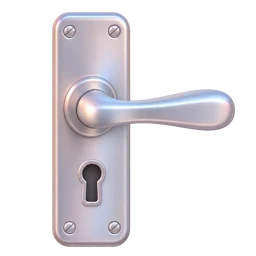
Door handles · 14 min read
Patio Door Handle Replacement: Sizing Guide

By The Sparrow team · Updated 30 November 2026
Sizes checked against the Sparrow parts catalogue · How we write guides
The handle on your sliding patio door has gone loose, stiff or broken, and the usual uPVC door handle advice does not quite fit. The door slides rather than swings, the handle may sit on the face of the panel with no matching plate on the other side, and the lock behind it may be a hook rather than a row of rollers. Buying the wrong part is easy because the screw holes look standard and the photos all look similar.
What is different about a patio door handle?
A patio door handle is a pull point and a lock control on a sliding panel. Every time you open the door you pull the panel sideways, so the handle takes a steady load that a hinged door handle does not. It also has to release a lock that holds the panel to the frame at the leading edge, and sometimes at the top and bottom as well.
Many patio handles include the key cylinder in the handle body. That means the handle is not just furniture: it is part of the locking device. Replacing it can change how the door locks, not only how it looks. On other doors the handle is separate from the lock case, and you can change the handle while leaving the lock alone.
The handle sits on the leading edge of the sliding panel, the edge that meets the frame when the door is closed. That is the edge that takes the pull every time you open the door, and the edge where the lock engages. If the panel has a handle on both faces, the two are usually clamped through the panel or fixed to the same lock. If it has one handle inside, the outside may be a flush pull that takes no lock load at all.
The two families are surface-fixed and mortice. They are measured differently, fixed differently and replaced differently. Identify the family before you take any measurements, because a perfect set of screw centres for the wrong type is no help at all.
Surface-fixed or mortice: which type?
| Feature | Surface-fixed handle | Mortice handle |
|---|---|---|
| Where the body sits | On the face of the sliding panel | On a backplate, with a lock case inside the door stile |
| Door edge | No metal faceplate, or only a small striker | Metal faceplate with screws |
| Fixings | Screws into the door face | Backplate screws and a spindle through the door |
| Lock | Latch or lock body behind the handle | Mortice case with a hook or latch |
| Typical door | Many uPVC and aluminium sliders | Sliders with a hook lock and faceplate |
| What you measure | Screw centres, plate size, spindle | Backset, PZ, spindle, faceplate |
| What usually fails | Handle spring, latch, key barrel | Lock case, hook, spindle |
A door can have a surface handle and a mortice lock at the same time, with the handle driving the lock through a short spindle. That is why the edge check comes first. The handle's mounting style tells you how to remove it. The faceplate tells you what is behind it.
How to identify your patio door handle
- Slide the door open far enough to see the leading edge clearly.
- Look for a metal faceplate set into the edge. Screws in that plate mean a mortice lock case inside the stile.
- Look at the handle on the face of the door. If the body is screwed directly to the door with no backplate, it is surface-fixed.
- Find the key. A cylinder set into the handle body points to an integral lock. A separate cylinder in the door face points to a different arrangement.
- Operate the handle slowly and watch the edge. If a hook swings out, the handle is driving a hook lock.
- Photograph the handle from both faces and the door edge in one set, with a ruler in shot.
If the door has a handle on the inside only, photograph that face and the edge. The outside may have a flush pull or no furniture at all. The lock is still the same part, so the edge and the spindle are what matter.
What is backset on a patio door?
Backset is the distance from the door edge, or from the outer face of the faceplate, to the centre of the spindle. It sets how far the lock case sits inside the door. A lock with the wrong backset will not line up with the handle or the keep, and the hook will not reach the frame properly.
PZ is the distance from the centre of the spindle to the centre of the keyhole. It is the same idea as the PZ on a uPVC door handle, but do not assume it is 92 mm just because the door is uPVC. Measure yours rather than borrowing a number from another guide.
If your handle uses a euro profile cylinder, the cylinder itself is measured in the usual outside/inside way from the centre of its fixing screw. The euro cylinder measuring guide covers that part, and the handle measurements here cover the furniture around it.
The spindle is the bar that carries the handle's turn into the lock. Patio door spindles vary. Some are 7 mm square, some 8 mm square, and some are a flat bar or a splined stub. Measure across the flats and note the shape before you order a handle that comes with its own spindle.
Not sure which one you have?Snap it next to a £1 coin and Sparrow names the exact replacement for door handles, with the measurements to check. Your first scan is free.
Get the appHow to measure backset and PZ
- Open the door and wedge the panel so it cannot slide while you measure.
- Find the faceplate on the leading edge and clean any paint or dirt off it.
- Measure from the outer face of the faceplate to the centre of the spindle hole. That is the backset.
- Measure from the centre of the spindle to the centre of the keyhole. That is the PZ.
- Measure the spindle across the flats, and measure its length if it is a through spindle.
- Measure the faceplate height and width if you are replacing the lock case as well.
- Note which way the hook or latch faces, and which way it throws.
Use the same ruler for every measurement and write the numbers in millimetres. A backset measured from the door face instead of the faceplate can be 2 or 3 mm out, which is enough to stop the new lock lining up. If the faceplate is proud of the door, measure from the plate, not the door skin.
Measuring the handle fixings and backplate
On a surface-fixed handle, the screws usually run horizontally, one either side of the lever, or vertically above and below it. Measure the distance between the screw centres in both directions, because a handle with the same horizontal spacing can still have a different vertical spacing. Measure the plate length and width as well, so the new handle covers the old outline.
On a mortice handle, the backplate may be fixed with two screws above and below the spindle, or with screws at diagonally opposite corners. Measure the centres, the plate size and the distance from the plate edge to the spindle. That last number is the one that decides whether the handle will sit over the keyhole and the lock case in the right place.
| What to record | Where to measure | Why it matters |
|---|---|---|
| Handle type | Face or edge of the panel | Decides which measurements you need |
| Screw centres | Centre of screw to centre of screw | The new handle must use the same holes |
| Backplate size | Overall length and width | Covers the old marks and fits the flat area |
| Spindle | Across the flats | 7 mm, 8 mm and flat bars are not interchangeable |
| Backset | Faceplate to spindle centre | Lines the lock up with the door edge |
| PZ | Spindle centre to keyhole centre | Lines the key up with the lock |
| Hook direction | Edge, with the handle operated | The new lock must throw the same way |
A handle that is 2 mm wider than the old one may still fit the screws and look wrong, because it overhangs a narrow stile or catches the frame as the door slides. Check the plate against the flat area around the old handle, not just against the hole spacing.
If the handle has already come off, make a paper template before you put it down. Lay the backplate on the paper, mark the screw holes and the spindle slot, and write the measurements beside them. A template is easier to compare with a product drawing than a handful of numbers, and it stops the old screws from being mixed up with the new ones. The door handle PZ and screw centre guide explains the same measurements on a hinged handle, which helps when the patio plate has a similar layout.
Hook locks and what the handle has to do
A hook lock has a curved hook that swings out of the door edge and catches a keep in the frame. When you turn the handle or the key, the hook rotates and pulls the sliding panel tight against the frame. Some patio doors have one hook, some have a hook and a latch, and some add shootbolts at the top and bottom.
The handle may operate the latch only, with the key throwing the hook. Or the handle may throw both. Test this with the door open and watch the edge while you move the handle and turn the key. Knowing which part does what tells you whether a stiff or loose feel is the handle, the spindle or the lock case.
If the handle moves but the hook does not, the spindle is worn or too short, or the lock case has failed. If the key turns but the hook does not, the fault is inside the case. Neither is fixed by a new handle, and a new handle may hide the problem for a week before it returns.
Which way does your door slide?
Sliding doors are handed by the direction the panel moves and by which edge leads. Stand outside with the door closed and note whether the panel slides left or right to open, and which face carries the handle. Two patio doors in the same house can slide opposite ways, so do not copy the measurements from one to the other without checking.
The hook direction matters when you replace the lock case, and sometimes when you replace the handle if the handle has an offset body. A reversible handle can be flipped, but a handed one cannot. Check the product diagram from the same viewpoint you used for your door, and compare the hook's throw with the old part.
If the door has a fixed panel and a sliding panel, the handle is on the sliding panel's leading edge. The fixed panel may have a flush pull or no handle at all. Ordering a pair for both panels is usually unnecessary, and the fixed panel may not have the same cut-outs.
What to check before you buy
- Handle family: surface-fixed or mortice. The two are not interchangeable.
- Screw centres: horizontal and vertical, measured centre to centre.
- Backplate size: length and width, plus the flat area around it.
- Spindle: shape, size across the flats and length.
- Backset and PZ: both numbers if the handle drives a mortice lock.
- Hook or latch: type, direction and throw.
- Key arrangement: integral cylinder, separate cylinder or no key.
- Door thickness: needed if the spindle passes through the panel.
- Slide direction: left or right, and which face the handle sits on.
- Contents: check whether the price includes the lock case, spindle and keys.
Patio door hardware changes with the maker and the age of the door. A handle that looks identical in a photo can have a different backset or a different hook throw. If the listing gives no backset, ask the seller before you order, or buy from a supplier that accepts returns.
How to replace a surface-fixed handle
- Slide the door open and wedge it so it cannot move.
- Find the fixing screws. They may be under a cover or behind the lever.
- Support the handle body and undo the screws evenly.
- Ease the handle away and note how the spindle or latch stub engages the lock.
- Compare the new handle with the old one: screw centres, spindle, plate size and lever direction.
- Fit the new handle, engage the spindle, and start the screws by hand.
- Tighten evenly until the body is snug, then test the latch or hook with the door open.
- Close the door and test the key, the handle and the seal.
Do not overtighten a surface handle. The screws go into the door skin or a reinforcing plate, and a stripped hole in a composite or uPVC panel is difficult to repair. If a screw will not tighten, stop and find out why before you try a longer screw.
How to replace a mortice handle
- Open the door and wedge the panel.
- Remove the backplate screws and ease the handle off the spindle.
- Slide the spindle out and keep it with the old handle.
- Check the new backplate against the old one: screw centres, PZ, backset and plate size.
- Fit the new handle over the spindle and engage the lock follower.
- Start the screws by hand and tighten evenly.
- Test the handle and key with the door open, watching the hook at the edge.
- Close the door and check that the hook catches the keep without force.
If you are replacing the lock case as well, the job is bigger. The faceplate screws come out, the case slides out of the stile, and the new case has to match the backset, the faceplate size and the hook direction. A case that is close but not exact can leave the door unable to close or lock. If you have not done one before, a locksmith is the safer route.
Troubleshooting a patio door handle
| What happens | Likely cause | What to do |
|---|---|---|
| Handle moves but the hook does not | Spindle worn, too short or disengaged | Check the spindle before buying a handle |
| Handle feels loose on the panel | Fixing screws loose or backplate cracked | Tighten, or replace the handle |
| Key turns but the hook stays put | Lock case fault | Repair or replace the case |
| Handle is stiff | Spindle binding, hook tight in the keep, dirt in the track | Clean the track, check alignment, do not force |
| Door will not close fully | Hook or keep out of line, or the panel has dropped | Check the panel and track before adjusting the handle |
| Door slides open on its own | Track not level or a worn roller | This is a door or track job, not a handle job |
| Handle spins without resistance | Spindle missing or snapped | Stop and replace the spindle or call a locksmith |
A sliding panel is heavy, and a panel that has dropped on its rollers can make a healthy handle feel stiff or loose. Check the gap between the panel and the frame at the top and bottom before you blame the handle.
Clean the track before you test a new handle. Grit and hair in the track make the panel harder to pull, which feels like a stiff handle. Vacuum the track, wipe it, and check that the panel runs freely before you decide the handle is at fault. If the panel still sticks, the rollers or the track are the problem. The guide to a door that will not lock covers the lock side of the same diagnosis.
Common mistakes
- Buying a standard uPVC lever pair for a sliding door.
- Measuring the backset from the door skin instead of the faceplate.
- Assuming the spindle is 8 mm square.
- Ordering a handle without checking the hook direction.
- Replacing the handle when the lock case is worn.
- Forcing the door shut over a misaligned keep.
- Using longer screws in a hollow panel.
- Throwing away the old handle before the new one is tested.
The most common mistake is treating a patio handle like a hinged-door handle. The fixing holes may look similar, but the lock behind them works in a different way. Once you know the family, the measurements are straightforward.
When to call a professional
Call a locksmith or door engineer if the lock case has failed, if the hook or keep is damaged, if the panel has come off its rollers, or if the door will not secure after a handle change. Sliding panels are heavy and the glass is under load, so do not lift a panel out on your own.
Also stop if the door is part of a certified fire assembly or a rented property where the building owner controls the hardware. The certificate and the owner decide what can be fitted. A handle change is not worth compromising a door that has been tested as a complete assembly.
Keep the old handle and the product details until the new one has worked through a full week of use. A handle that feels right on the day can loosen once the door has been slid a few dozen times, and the old part helps you check the spindle and backset if you need to order again.
How Sparrow helps
Sparrow, an iPhone app from ThinkingAI Limited, identifies worn household parts from a photo taken next to a pound coin. Its door handle library is built around lever/lever and lever/pad pairs for hinged doors, so a sliding patio handle may sit outside it. The measurements in this guide are the reliable route. If your patio door has a standard lever plate, a photo scan can still help you compare the PZ and screw centres, and My Home keeps the sizes for the next part you need. The first photo scan is free, and Sparrow Pro adds unlimited scans and saved parts. It matches parts only, so it will not decide whether your lock case or track needs repair.
Frequently asked questions
How do I know if my patio door handle is mortice or surface-fixed?
Look at the door edge. A metal faceplate with screws means a mortice lock inside the door. A handle body screwed to the door face with no faceplate usually means a surface-fixed handle.
What is backset on a patio door?
Backset is the distance from the door edge or faceplate to the centre of the spindle. It sets how far the lock sits from the edge, so a replacement lock must match it or the handle and hook will not line up.
Can I replace just the handle on a patio door?
Yes, if the lock case is sound and the new handle matches the screw centres, spindle and backset. If the hook or latch does not move when the handle does, the lock case may be the failed part.
Are patio door handles a standard size?
No. Surface-fixed and mortice handles vary in screw centres, spindle size and backset, and sliding doors from different makers use different locks. Measure the old handle rather than assuming a standard.
Why does my patio door handle feel loose?
The fixing screws may have worked loose, the spindle may be worn, or the backplate may be cracked. Check the screws first, then the spindle and the lock case.
Can I fit a normal uPVC door handle to a patio door?
Not usually. A standard uPVC lever pair is made for a multipoint lock in a hinged door. A sliding patio handle has a different fixing pattern and often drives a hook lock.
Not sure which one you have?Snap it next to a £1 coin and Sparrow names the exact replacement for door handles, with the measurements to check. Your first scan is free.
Get the appParts guides, Sparrow
We build Sparrow, the iPhone app that identifies worn household parts from a photo taken next to a £1 coin. Our guides cover the six parts Sparrow matches: tap cartridges, euro cylinder locks, uPVC window handles, door handles, shower door seals and window hinges. Every size in a guide is checked against the same parts catalogue the app uses.

