uPVC door won't lock? How to tell which part has failed
A uPVC door has several parts that work together: the handle lifts the multipoint locking strip, the key in the euro cylinder throws the deadbolt, and hooks or rollers engage keeps in the frame. When it stops locking, buying the wrong part wastes money. Narrow it down first.
Step 1: test with the door open
- Open the door so nothing is touching the frame.
- Lift the handle fully. Watch the hooks, rollers or bolts along the door edge: do they all move?
- Turn the key to lock. Does the deadbolt shoot out smoothly?
- Reverse both and check everything retracts.
If all of this works when open, the parts are probably fine and the door is catching on the frame. If something fails even with the door open, use the table below.
Which part has failed?
| Symptom | Likely part | What to measure |
|---|---|---|
| Locks when open, not when closed | Door has dropped or keeps need adjusting | No part needed: adjust hinges or keeps |
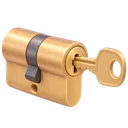
| Key stiff, catches or will not turn fully | Euro cylinder | Cylinder size (outside/inside) |
| Handle droops or will not spring back | Door handle (worn spring) | PZ and screw centres |
| Handle moves but locking points do not | Gearbox or multipoint mechanism | Backset, PZ and overall length (locksmith job for most people) |
| Snapped key or lost keys | Euro cylinder | Cylinder size |

Not sure which one you have?Snap it next to a £1 coin and Sparrow names the exact replacement for euro cylinder locks, with the measurements to check.
Download on the App StoreGet the appIf the door has dropped
Doors drop over time, especially in cold weather or after hinges loosen, so the locking points no longer line up with the keeps in the frame. A tell-tale sign is that the door locks if you lift it or push it hard. Adjusting the hinges or keeps usually fixes it. If you are not confident doing that, a locksmith or window and door specialist can adjust it quickly.
If it is the euro cylinder
A stiff or worn cylinder is the cheapest and easiest part to change: one fixing screw holds it in. Measure it from the centre of the fixing screw to each end and buy the same size, ideally an anti-snap rated one. See the euro cylinder sizes chart.
If it is the handle
A handle that droops has a worn internal spring. Replacement uPVC handles are sold by PZ (often 92 mm) and screw centres (often 122 mm); both must match the old handle.
Frequently asked questions
Why won't my uPVC door handle lift up to lock?
Most often the door has dropped or the locking points are catching on the keeps in the frame. Try lifting the handle while pushing the door firmly shut. If it then locks, the door needs adjusting rather than new parts.
How do I know if the gearbox is broken?
Signs include a handle that lifts but the hooks or rollers do not move, a handle that turns too far, or grinding inside the door edge. A failed gearbox needs replacing as a unit, matched by its backset, PZ and length.
Can a worn euro cylinder stop a door locking?
Yes. If the key turns stiffly, catches, or will not turn fully even with the handle lifted, the cylinder is likely worn or the wrong length and can be replaced on its own.
Should I call a locksmith?
If you are locked out, the door will not close securely, or the gearbox or multipoint mechanism needs replacing and you are unsure, a locksmith is the safest option. Sparrow helps identify parts but does not give repair advice.
Not sure which one you have?Snap it next to a £1 coin and Sparrow names the exact replacement for euro cylinder locks, with the measurements to check.
Download on the App StoreGet the app