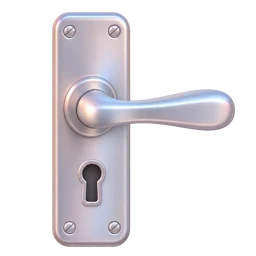
Door handles · 14 min read
92mm PZ Door Handle: How to Check the Other Sizes

By The Sparrow team · Updated 30 November 2026
Sizes checked against the Sparrow parts catalogue · How we write guides
Replacing a uPVC door handle looks simple until the new one arrives with the screws in the wrong place. The two numbers that decide the fit are not printed on the door, and they are easy to confuse. This guide shows how to measure PZ, screw centres and the other three details that catch people out, so the handle fits first time. The measurements take a few minutes with the old handle and a ruler, and they decide whether the new one fits, lines up and returns properly. You do not need to understand the lock to take them.
What does 92mm PZ mean?
PZ is the distance from the centre of the spindle to the centre of the keyhole. On a uPVC door handle, the spindle is the square bar that passes through the door and turns the lock. The keyhole is the round opening where the cylinder sits. A 92mm PZ handle has 92 mm between those two centres.
The measurement matters because the handle has to line up with the lock inside the door. If the PZ is wrong, the spindle will not sit in the follower and the keyhole will not line up with the cylinder. The handle may screw to the door but the door will not work properly.
PZ is not the width of the backplate, the distance between the screws or the length of the lever. Those are separate measurements, and each one can stop a handle fitting even when the PZ is correct.
You can get a rough PZ without removing the handle by measuring from the centre of the lever's pivot boss to the centre of the keyhole on the inside plate. It is only a check, not a substitute for measuring the holes with the handle off. The pivot boss is not always the exact spindle centre, so treat the result as a guide and confirm it before ordering.
What is the 92/122 standard?
The most common combination on UK uPVC doors is 92 mm PZ with 122 mm screw centres. Suppliers often write it as 92/122. It is a useful starting point, but it is not a guarantee. Doors from different makers, and doors of different ages, can use other combinations.
| Measurement | What it is | Common uPVC value |
|---|---|---|
| PZ | Centre of spindle to centre of keyhole | 92 mm |
| Screw centres | Centre of top fixing screw to centre of bottom one | 122 mm |
| Spindle | Square bar through the door | 8 mm square |
| Backplate | Length and width of the handle plate | Varies with the handle |
A 92/122 handle is not the same as a 92/211 handle. The PZ matches, but the screws do not, so the new backplate will not cover the old holes or line up with the fixings. Treat the two numbers as a pair that both have to be right.
Which doors use a 92mm PZ handle?
Most modern uPVC doors, and many composite doors, use a 92 mm PZ handle with a long backplate. The handle may be lever/lever, with a lever on both sides, or lever/pad, with a fixed pad outside and a lever inside. Both types use the same PZ and screw centres.
Some older or smaller doors use a 68 mm PZ. Some long backplates use screw centres around 211 to 215 mm rather than 122 mm. Internal doors are different again: they use a lever on a rose or a short backplate, sized by the spindle and the screw positions rather than by PZ.
If your door has a multipoint lock with hooks and rollers, the handle also has to lift the lever to engage them. That is a function of the lock, not the PZ, but it affects which handle will work. A handle with the wrong spring or a weak return can leave the lever drooping even when the measurements are right.
Why must PZ and screw centres both match?
PZ positions the spindle and keyhole relative to each other. Screw centres position the whole handle on the door. A handle can have the correct PZ and still be drilled for different screw centres, which is why buying by PZ alone is risky.
| Combination | What it fits | What happens if you mix them |
|---|---|---|
| 92 mm PZ, 122 mm centres | Most UK uPVC doors | The standard pairing; check both |
| 92 mm PZ, 211-215 mm centres | Some long-backplate doors | PZ lines up but the screws miss the old holes |
| 68 mm PZ, 122 mm centres | Some older or smaller doors | Spindle and keyhole sit too close together |
| Internal lever on rose | Internal doors with a tubular latch | No PZ; sized by spindle and rose |
Measure both numbers on the same handle, with the handle removed or the inside screws visible. Do not take one from the old handle and the other from a product listing. The two measurements belong to the same drilled pattern.
Not sure which one you have?Snap it next to a £1 coin and Sparrow names the exact replacement for door handles, with the measurements to check. Your first scan is free.
Get the appWhy does backplate size matter?
The backplate is the plate the lever and keyhole sit on. Its length and width decide whether the new handle covers the old screw holes and whether it fits the flat area of the door. A handle with the right PZ and screw centres can still fail on the backplate.
If the new plate is shorter than the old one, the old screw holes or faded patches may show. If it is longer, it may overhang the door edge, foul the frame when the door closes, or sit on a curved part of the door where it cannot lie flat. On a composite door, the plate may also need to clear a decorative trim.
Measure the old plate from top to bottom and side to side, then compare it with the listing. A few millimetres of extra length is usually fine if the door has space. A plate that is 20 mm longer can be a problem on a narrow stile.
Check the screw hole positions as well as the overall size. Some plates have the screws close to the lever; others have them near the ends. The centres tell you the spacing, but the plate shape tells you whether the holes sit within the flat part of the door.
What spindle does a 92mm PZ handle need?
The spindle is the square metal bar that connects the handle to the lock. Most uPVC door handles use an 8 mm square spindle. The width is standard enough that it is rarely the problem, but the length often is.
If the spindle is too short, it will not reach far enough into the lock follower. The lever may turn loosely, or the handle may spin without operating the latch. If it is too long, it can bottom out in the lock and bind, making the lever stiff or stopping it returning.
Measure the old spindle from end to end, or measure the door thickness and compare it with the spindle supplied. Some replacement handles come with a long spindle that is cut to length. Cut it square and deburr the end so it seats cleanly.
Do not reuse a worn spindle that has rounded corners. A rounded spindle can slip inside the follower, which feels like a broken handle but is really a worn bar. If the old spindle is tight in the handle and the lock, a new one of the same size is cheap insurance.
How do I check the handing?
Handedness is the direction the lever points when the door is closed. Stand outside the door and look at the handle. If the lever points to the left, note that. Then check how the supplier describes its handles, because some describe handing from outside and some from inside.
Some handles are reversible: the lever can be swapped from one side to the other by removing a screw or a pin. Others are fixed. If you buy a handed handle the wrong way round, the lever may point upwards or foul the frame when the door closes.
The safest check is to hold the new handle against the door before driving any screws. Offer it up with the spindle in place and move the lever through its full swing. If it hits the frame or the door trim, the handing or the backplate is wrong.
On a lever/pad set, the pad goes outside and the lever inside. That is a handing decision as well: the pad has to sit on the outside face, and the lever has to point the same way as the old one.
Lever/lever or lever/pad: which do I need?
A lever/lever handle has a moving lever on both sides of the door. A lever/pad handle has a lever inside and a fixed pad outside. The pad does not move; it is there to pull the door closed and to give the outside a clean look.
Lever/lever suits a back door or a door where the latch can be operated from outside without a key. Lever/pad suits a front door where the outside should not open without a key. The choice is about how the door is used, not about the PZ.
Both types use the same 92 mm PZ and 122 mm screw centres on a typical uPVC door. If you are replacing a lever/pad with a lever/lever, check that the lock and the door furniture are designed for it. The outside lever may not be appropriate on a front door, and the fixings may differ.
Do I need a spring-assisted handle?
Some handles have a spring inside the backplate that returns the lever to level. Others rely on the spring in the lock. If you fit a non-sprung handle to a lock that has no return spring, the lever will droop. If you fit a sprung handle to a lock that already has a strong spring, the lever may feel stiff.
Compare the old and new handles before fitting. With the handle off the door, push the lever down and let go. A sprung handle returns on its own. A non-sprung handle stays where you leave it. Match what came off the door unless the lock has been changed.
Spring-assisted handles are common on doors with multipoint locks, where the lever has to lift to engage the locking points. The handle spring helps the lever return after lifting. If the old handle is sprung, buy a sprung replacement. A lever that still droops after a like-for-like swap may have a worn spring cassette, which is covered in uPVC door handle drooping: the spring cassette.
How to measure your old handle
Remove the inside handle first. The fixing screws are usually visible on the inside plate, under small caps. Support the outside handle so it does not fall when the last screw comes out.
- PZ: measure from the centre of the square spindle hole to the centre of the round keyhole. Use the centre of the round part, not the edge of the whole cutout.
- Screw centres: measure from the centre of the top screw hole to the centre of the bottom one. Measure on the inside plate, where the holes are clear.
- Backplate: measure the length and width of the plate. Note the shape and the position of the screw holes.
- Spindle: measure the length and confirm the bar is 8 mm square. Check the ends for wear.
- Type: note lever/lever or lever/pad, and which side the pad sits on.
- Spring: test whether the old handle returns on its own.
- Handing: note which way the lever points when the door is closed, as seen from outside.
If the handle is broken or missing, measure the other side of the door. The two halves of a pair share the same PZ and screw centres because the fixing screws pass through both. If both are gone, measure the door: the spindle hole to the cylinder cutout gives the PZ, and the screw holes give the centres. Sparrow is an iPhone app made by ThinkingAI Limited. It identifies worn household parts from a photo taken beside a £1 coin. A face-on photo of the handle with the coin on the backplate gives it the scale for PZ and screw centres.
What to check before you order
A 92mm PZ handle is only the starting point. Run through this list before you pay, especially if the door is composite or has a multipoint lock.
| Check | Why it matters | What to note |
|---|---|---|
| PZ | Lines up the spindle and keyhole | 92 mm, or measure yours |
| Screw centres | Lines up the fixing holes | 122 mm on most uPVC doors |
| Backplate | Covers old holes and fits the door | Length, width and hole positions |
| Spindle | Reaches the lock follower | 8 mm square, correct length |
| Handing | Lever points the right way | Left or right as seen from outside |
| Type | Matches how the door is used | Lever/lever or lever/pad |
| Spring | Returns the lever | Sprung or non-sprung |
If the listing gives a PZ and screw centres but no backplate size, ask the seller. A handle that fits the drillings but overhangs the door is still the wrong handle. If the door is a fire door, the door's certificate and a qualified installer decide what can be fitted.
How to fit a 92mm PZ handle
Work with the door open. That way you can test the latch and the lock without locking yourself out, and you can see whether the lever fouls the frame.
- Remove the old handle. Take out the inside screws, lift the inside handle away, then withdraw the outside handle and the spindle.
- Clean the door face. Remove old tape, dirt and any loose material around the holes. Do not enlarge the holes.
- Check the new spindle. Fit it through the door and confirm it reaches the lock follower on both sides. Cut it to length if needed and deburr the ends.
- Offer up the outside handle. Pass the spindle through the door and locate the handle on the outside face. Check the lever points the right way.
- Fit the inside handle. Align the screw holes and start both screws by hand.
- Tighten evenly. Bring the screws down in turn, a little at a time. Do not overtighten, especially on a composite door.
- Test the lever. With the door open, press the lever and check the latch moves freely. Lift the lever if the door has a multipoint lock.
- Close the door and test the lock. Check the key turns without force and the door seals without lifting the handle too hard.
If the screws pull the handle out of line, stop. The screw centres or the backplate are wrong, and forcing the screws can crack the plate or damage the door skin.
Why is the new handle not working?
Most problems after fitting are about alignment, springing or the lock rather than the handle itself. Use the symptom to decide whether to adjust the handle or look deeper.
| Symptom | Likely cause | What to do |
|---|---|---|
| Lever droops | Handle not sprung, or spindle too short | Match the old spring type and check the spindle length |
| Handle feels loose | Screws not tight, or backplate distorted | Tighten evenly; replace the plate if cracked |
| Lever spins without opening | Spindle missing, too short or rounded | Fit a new 8 mm spindle of the right length |
| Key is stiff | Handle not aligned with the cylinder | Check the PZ and loosen the screws slightly |
| Door will not lock | Gearbox or door alignment, not the handle | Check the mechanism before buying another handle |
| Lever hits the frame | Wrong handing or backplate too long | Swap for the correct hand or a shorter plate |
| Screws will not line up | Wrong screw centres | Order the correct drilling; do not drill new holes |
A handle that fits but will not lock is usually a sign of a worn gearbox or a door that has dropped. See uPVC door won't lock: which part has failed before you spend more on handles.
What are the common mistakes?
- Buying by PZ alone. The screw centres and backplate have to match too.
- Confusing PZ with screw centres. They are different measurements on the same handle.
- Reusing a worn spindle. Rounded corners make the lever feel broken.
- Ignoring handing. A lever that points the wrong way can foul the frame.
- Fitting a non-sprung handle to a lock that needs one. The lever will droop.
- Overtightening the screws. It can crack the backplate or distort the door skin.
- Drilling new holes. It weakens the door and rarely solves an alignment problem.
- Assuming both sides of the door are the same. A lever/pad set has a fixed pad outside, and the pad does not move.
- Buying a handle without checking the door thickness. The spindle has to reach the lock, and a thick door needs a longer bar.
When to stop and call a locksmith
Stop if the door will not secure, the key will not turn, the spindle is stuck in the lock, or the handle has pulled away from the door and taken the fixings with it. Those are lock or door problems, not handle problems.
Call a locksmith if the gearbox has failed, the door has dropped so far that the lock no longer lines up, or the door is a fire door. For a fire door, the door's certificate and a qualified installer decide what hardware can be fitted.
If the door is composite and the handle screws will not hold, do not keep tightening them. The door skin can crush, and the repair is a bigger job than a callout. A locksmith or door fitter can repair the fixing points properly.
What changes if you look after several properties?
Door handles are easy to standardise and easy to get wrong. Record the PZ, screw centres, backplate size and handing for each door. A photo of the old handle with a ruler across the backplate saves a second visit and makes a repeat order simple.
Keep one spare 92/122 lever/lever handle and one lever/pad handle if your properties use both. Check the spindle length against the door thickness before fitting, because the same handle can need a different spindle on a thicker door.
When a tenant reports a drooping handle, ask whether the door still locks. If it does, the handle spring or spindle is the likely part. If it does not, the gearbox or alignment needs a professional, and a new handle will not fix it. The measurement method for PZ and screw centres is set out in uPVC door handle sizes: PZ and screw centres.
Frequently asked questions
What does 92mm PZ mean on a door handle?
It means the distance from the centre of the spindle to the centre of the keyhole is 92 mm. PZ is the usual term for that distance on a uPVC door handle. The screw centres are a separate measurement.
Is 92mm PZ the same as 122mm screw centres?
No. PZ is spindle to keyhole; screw centres are between the two fixing screws. 92 mm PZ and 122 mm centres is a common pairing on UK uPVC doors, but each number has to be checked on its own.
Can I fit a 92mm PZ handle with different screw centres?
Only if the new handle has slotted or adjustable fixings that cover the difference. A handle drilled for 122 mm centres will not line up with holes at 211 mm, so measure both before ordering.
How do I know if my handle is left or right handed?
Stand outside the closed door and look at the lever. Note which way it points. Makers sometimes describe handing from inside, so check the product listing and compare it with your old handle.
What size spindle does a uPVC door handle use?
Most use an 8 mm square spindle. The length varies with the door and the handle, so measure the old spindle or the door thickness before ordering.
Why does my new handle droop?
The handle may not be spring-assisted like the old one, or the spindle may be too short to engage the lock follower. Compare the old and new parts before forcing the lever.
Not sure which one you have?Snap it next to a £1 coin and Sparrow names the exact replacement for door handles, with the measurements to check. Your first scan is free.
Get the appParts guides, Sparrow
We build Sparrow, the iPhone app that identifies worn household parts from a photo taken next to a £1 coin. Our guides cover the six parts Sparrow matches: tap cartridges, euro cylinder locks, uPVC window handles, door handles, shower door seals and window hinges. Every size in a guide is checked against the same parts catalogue the app uses.

